

When you’re choosing a base layer for hiking, camping or outdoor sport, the decision usually comes down to two options: Merino wool or a synthetic fabric such as polyester.
Both can work extremely well, but they behave differently once you start sweating.
Merino’s strengths are comfort, odour resistance and temperature regulation, particularly over long days or multi-day trips. Synthetic fabrics generally dry faster, cope better with heavy sweating and abrasion, and cost less.
And for many people, a Merino-synthetic blend may actually be the best compromise.
So rather than asking which fabric is universally better, a more useful question is:
Which is better for what you’re actually doing?
Merino vs synthetic: the quick answer
| Merino wool | Synthetic | |
|---|---|---|
| Odour resistance | Excellent | Fair |
| Drying speed | Moderate | Excellent |
| Comfort | Excellent | Good to excellent |
| Durability | Moderate | Excellent |
| Heavy sweating | Good | Excellent |
| Multi-day wear | Excellent | Good |
| Backpack abrasion | Moderate | Excellent |
| Cost | Higher | Lower |
| Cold, lower-output use | Excellent | Good |
| High-output activity | Good | Excellent |
There is an important qualification to that table: fabric thickness, weave, fit and construction can matter just as much as fibre type.
A lightweight Merino 150 top isn’t directly comparable with a heavyweight synthetic thermal simply because one is wool and the other is polyester.
What should a base layer actually do?
A base layer sits next to your skin and forms the first part of your outdoor clothing system.
Its main job isn’t simply to keep you warm. It also needs to help manage the moisture and heat your body produces while you’re moving.
This becomes particularly important outdoors because your level of activity is constantly changing.
You might generate plenty of heat and sweat hiking uphill, then cool quickly when you stop on an exposed ridge or arrive at camp.
Both Merino and synthetic fabrics are designed to deal with this, but they do it in different ways.
Merino wool base layers
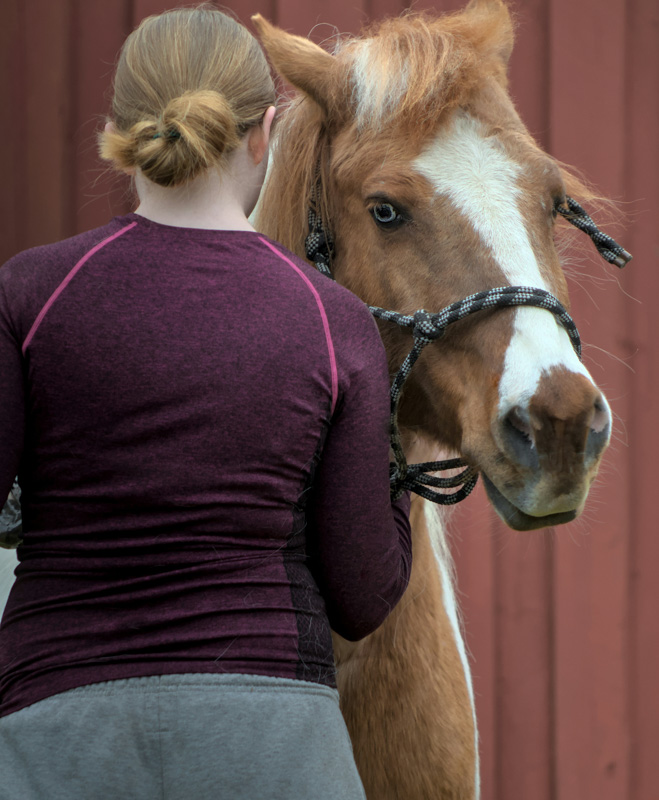
Modern Merino wool uses much finer fibres than the traditional wool clothing many people associate with heavy, itchy jumpers.
That makes it particularly well suited to clothing worn directly against the skin.
Where Merino excels
Odour resistance
This is probably Merino’s clearest advantage.
Wool fibres can absorb moisture vapour and trap some of the compounds responsible for body odour within the fibre structure. Woolmark cites research finding substantially less retained odour in wool compared with polyester after wear.
That matters surprisingly little on a two-hour walk.
It matters a lot three or four days into a hiking trip.
A Merino top can often be worn several times before it needs washing, which makes it particularly useful when you’re travelling light or don’t have regular access to laundry. REI likewise identifies Merino as particularly useful when multiple wears between washes are important.
Comfort
Good-quality Merino is exceptionally comfortable next to the skin.
Its very fine fibres make it much softer than traditional wool, while the fabric generally feels less clammy than many synthetics when slightly damp.
That’s one reason Merino has become so popular for socks, underwear and base layers.
Temperature regulation
Merino fibres absorb moisture vapour and release it again as conditions change. The natural crimp in wool also creates tiny insulating air pockets within the fabric.
Together, those properties help Merino remain comfortable across a fairly broad range of temperatures.
This makes it particularly useful for activities where your effort level and the weather both vary during the day.
Multi-day use
Put odour resistance and comfort together and Merino becomes particularly attractive for:
- backpacking
- hiking trips
- travel
- camping
- ski trips
- situations where laundry isn’t readily available
Being able to comfortably wear the same top several times can also reduce how much clothing you need to carry.
I’ve used lightweight Merino base layers for cycling and outdoor use for more than a decade. What I’ve found most noticeable isn’t necessarily extra warmth, but how comfortable they remain over a long day and how much less odour they retain than many synthetic tops.
Where Merino isn’t so good
It dries more slowly
This is probably the most important disadvantage.
Merino takes some moisture into the fibre itself. That’s part of what makes it comfortable and effective at managing humidity, but it also means a genuinely wet Merino garment usually takes longer to dry than polyester.
Synthetic fibres absorb very little water internally, which allows moisture to evaporate much more quickly.
If you’re spending hours generating a lot of sweat, that can be a major advantage for synthetic clothing.
Fine Merino isn’t particularly tough
Lightweight Merino can wear through.
Repeated rubbing from backpack shoulder straps, hip belts and other equipment can gradually thin the fabric or create holes. REI specifically notes that Merino worn directly beneath heavy pack straps generally won’t last as long as synthetic fabric.
This becomes more noticeable as Merino fabric gets lighter.
It’s expensive
Quality Merino normally costs considerably more than a straightforward polyester base layer.
Whether that premium makes sense depends heavily on how you intend to use it.
If you’re travelling or hiking for a week and wearing the same top repeatedly, Merino’s advantages become much easier to justify.
If you’re doing a two-hour Saturday hike and throwing everything into the washing machine afterwards, synthetic suddenly looks pretty compelling.
Synthetic base layers

Most synthetic base layers use polyester, nylon or a combination of synthetic fibres, often with elastane added for stretch.
Synthetic shouldn’t really be thought of simply as the cheap alternative to wool.
For certain activities, it’s actually the better technical choice.
Synthetic dries fast
This is synthetic’s biggest advantage.
Polyester and similar fibres absorb relatively little water, allowing sweat to move through the fabric and evaporate quickly. REI describes synthetics as its driest-feeling base-layer option and particularly suitable for people who run hot, sweat heavily or spend time in wet conditions.
For high-output activities such as:
- trail running
- fast hiking
- cycling
- ski touring
- cross-country skiing
- climbing
that can be more valuable than Merino’s superior odour resistance.
Synthetic fabrics are especially useful when you know you’re going to sweat heavily and want your clothing to dry as quickly as possible afterwards.
Synthetic is durable
Polyester and nylon tolerate abrasion exceptionally well.
If you’re regularly wearing a backpack, repeatedly washing the garment or generally treating your outdoor clothing hard, synthetic has a considerable advantage.
You can also make very lightweight synthetic garments without sacrificing durability to the same extent as very fine Merino.
Synthetic base layers are generally easier to care for and tolerate frequent washing well. Merino usually benefits from gentler washing, cooler temperatures and air drying, although care instructions vary between garments.
That’s worth considering if a base layer will be used several times a week. Synthetic’s durability isn’t only about backpack abrasion — it can also cope particularly well with repeated washing. Always follow the manufacturer’s care instructions, especially with lightweight Merino.
Synthetic is cheaper
There are good synthetic base layers available at relatively modest prices.
For someone building their first outdoor layering system, that’s worth considering.
A decent synthetic base layer combined with good insulation and a proper weatherproof shell may be a better use of a limited budget than putting most of the money into an expensive Merino top.
Synthetic’s big disadvantage: odour
This is where Merino usually wins comfortably.
Synthetic garments, particularly polyester, tend to retain odour more readily after repeated use. Some modern fabrics use antimicrobial or odour-control treatments to reduce the problem, but Merino still has a significant advantage when clothing will be worn for several days between washes.
That distinction helps explain why someone might prefer synthetic for a hard trail run but choose Merino for a five-day hiking trip.
What about Merino-synthetic blends?
A blend isn’t simply cheaper Merino.
Adding nylon or polyester can address some of wool’s genuine weaknesses.
A well-designed blend can retain much of Merino’s:
- softness
- odour resistance
- temperature regulation
- next-to-skin comfort
while improving:
- durability
- shape retention
- drying time
- abrasion resistance
REI specifically recommends considering wool-synthetic blends where extra durability is desirable.
This can make blends particularly attractive for hikers carrying backpacks.
You sacrifice some of the characteristics of 100% Merino, but you get a garment that’s usually easier to live with.
For someone wanting one general-purpose outdoor base layer, a good Merino blend can be a very sensible choice.
Merino vs synthetic for hiking
Day hiking
Either is fine.
For a normal day hike where you’re going home afterwards, synthetic’s lower price and fast drying make a lot of sense.
If comfort is a bigger priority, Merino or a blend is excellent.
Fast or strenuous hiking
Synthetic or a lightweight blend has a clear advantage once you’re producing a lot of sweat.
Drying speed becomes increasingly important as your effort level rises, and there’s less benefit from Merino’s multi-day odour resistance if the garment is going straight into the wash that evening.
Multi-day hiking
Merino or a Merino blend becomes particularly attractive here.
This is where odour resistance moves from being a nice feature to a genuine practical benefit.
A single shirt that remains comfortable over several days can also mean less clothing in your pack.
Hiking with a heavy backpack
A blend or synthetic fabric is worth considering, particularly for lightweight garments.
Pure fine Merino can wear at the shoulders and around other high-friction areas where pack straps repeatedly rub.
Wet or humid conditions
Synthetic becomes increasingly attractive because it dries so quickly.
Merino can remain comfortable when damp, but it doesn’t magically stay dry and can take considerably longer to recover once saturated.
What should you wear at camp?
One of the most useful things you can do on a multi-day trip has little to do with choosing between Merino and synthetic:
Keep a dry base layer for camp and sleeping.
If you’ve spent the afternoon sweating uphill, changing into completely dry clothing once you stop can make a significant difference to comfort.
Merino is particularly pleasant as a camp or sleeping layer because it’s warm, soft and can be worn night after night without developing odour as quickly as most synthetic garments.
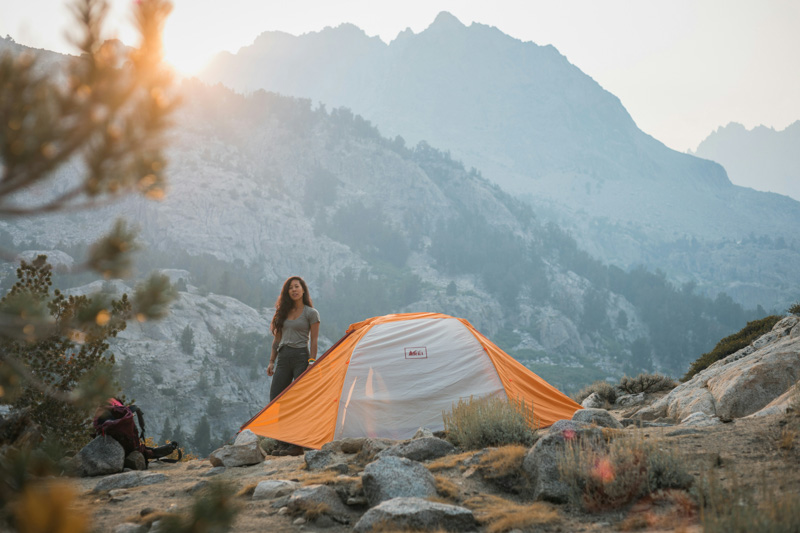
But the most important characteristic of your sleeping layer is still simple:
it’s dry.
Which is warmer?
Merino is generally an excellent option when warmth and comfort are priorities, and wool’s fibre structure provides useful insulation even when some moisture is present.
But don’t choose a base layer by fibre alone.
Fabric weight, knit, fit and overall garment construction all have a major effect on warmth.
A 200gsm Merino top isn’t meaningfully comparable with an ultralight synthetic running top simply because one is wool and the other isn’t.
Compare garments designed for similar conditions.
Merino vs synthetic: which should you choose?
Choose Merino if:
- you expect to wear the same garment for several days
- odour resistance matters
- next-to-skin comfort is a priority
- you’re travelling
- you’re camping or backpacking
- your activity is relatively low to moderate intensity
- you’ll use it as a dry camp or sleeping layer
Choose synthetic if:
- you sweat heavily
- drying speed matters
- you’re trail running or moving quickly
- the garment will get a lot of abrasion
- you’re on a tighter budget
- you’ll usually wash it after each use
- you’re regularly in wet or humid conditions
Choose a Merino blend if:
- you want a versatile hiking base layer
- you’ll regularly carry a backpack
- you like Merino but want better durability
- you want something between pure wool and pure synthetic
The bottom line
There isn’t a universal winner in the Merino versus synthetic debate.
Merino is hard to beat for comfort, odour resistance and multi-day use. Synthetic is hard to beat for drying speed, durability and high-output activity.
For general hiking and outdoor use, a Merino-synthetic blend can be an excellent middle ground.
And if you’re backpacking, one of the best base layers is simply the dry one you’ve kept in your pack for camp.
If you’ve decided Merino suits the way you use your outdoor clothing, our Complete Guide to Merino Base Layers covers fibre quality, fabric weights and choosing the right Merino layer in more detail.
FAQs
Does Merino wool dry faster than synthetic?
No. Synthetic fabrics such as polyester generally dry faster because they absorb less moisture within the fibre itself. Merino manages moisture very well but typically takes longer to dry after becoming genuinely wet.
Which smells less, Merino or polyester?
Merino generally has a substantial advantage for odour resistance, making it particularly useful when the same garment will be worn over several days.
Is Merino warmer than synthetic?
Fabric weight and construction matter too much to make a blanket comparison. Merino does retain insulating properties well when damp and often feels comfortable across a broad temperature range, but a heavy synthetic layer can obviously be warmer than lightweight Merino.
Is 100% Merino better than a Merino blend?
Not necessarily. Pure Merino maximises wool’s natural characteristics, while adding nylon or polyester can improve durability, stretch and drying speed. For hiking under a backpack, that trade-off can be worthwhile.